Egypt's most legendary royal necropolis — its history, the tombs open today, and how to visit like an insider.
Overview
Hidden in a dry desert valley on the West Bank of Luxor, the Valley of the Kings was the royal burial ground of Egypt's New Kingdom pharaohs for nearly 500 years. Sixty-four tombs have been discovered here so far, from modest chambers to the vast, painted corridors of Seti I and Ramses VI.
For travelers today, it remains one of the most emotional places in Egypt. You walk down the same sloping ramps that priests walked at the funerals of Tutankhamun, Ramses the Great and Amenhotep II, into rooms where the paint on the walls still looks freshly finished after 3,300 years.
History
Around 1539 BC, pharaoh Thutmose I broke with a thousand-year tradition and abandoned the pyramid in favour of a hidden rock-cut tomb. He chose a remote valley behind the Theban cliffs, watched over by a natural pyramid-shaped peak — al-Qurn — which he believed sacred to the goddess Meretseger.
For the next twenty dynasties, pharaohs of the New Kingdom — including Tutankhamun, Hatshepsut, Seti I, Ramses II and Ramses VI — were buried here in ever more elaborate tombs. Despite the secrecy, most tombs were looted in antiquity; only Tutankhamun's tomb, discovered by Howard Carter in 1922, was found nearly intact.
Excavation continues to this day. New tombs, mummy caches and workers' villages are still being found by international missions working across the valley floor.
Highlights
- Tomb of Ramses VI (KV9) — The most spectacular tomb usually open — a long corridor covered floor to ceiling in astronomical scenes and the Book of Gates.
- Tomb of Seti I (KV17) — The longest and deepest tomb in the valley, with the finest painted reliefs of the New Kingdom (separate premium ticket).
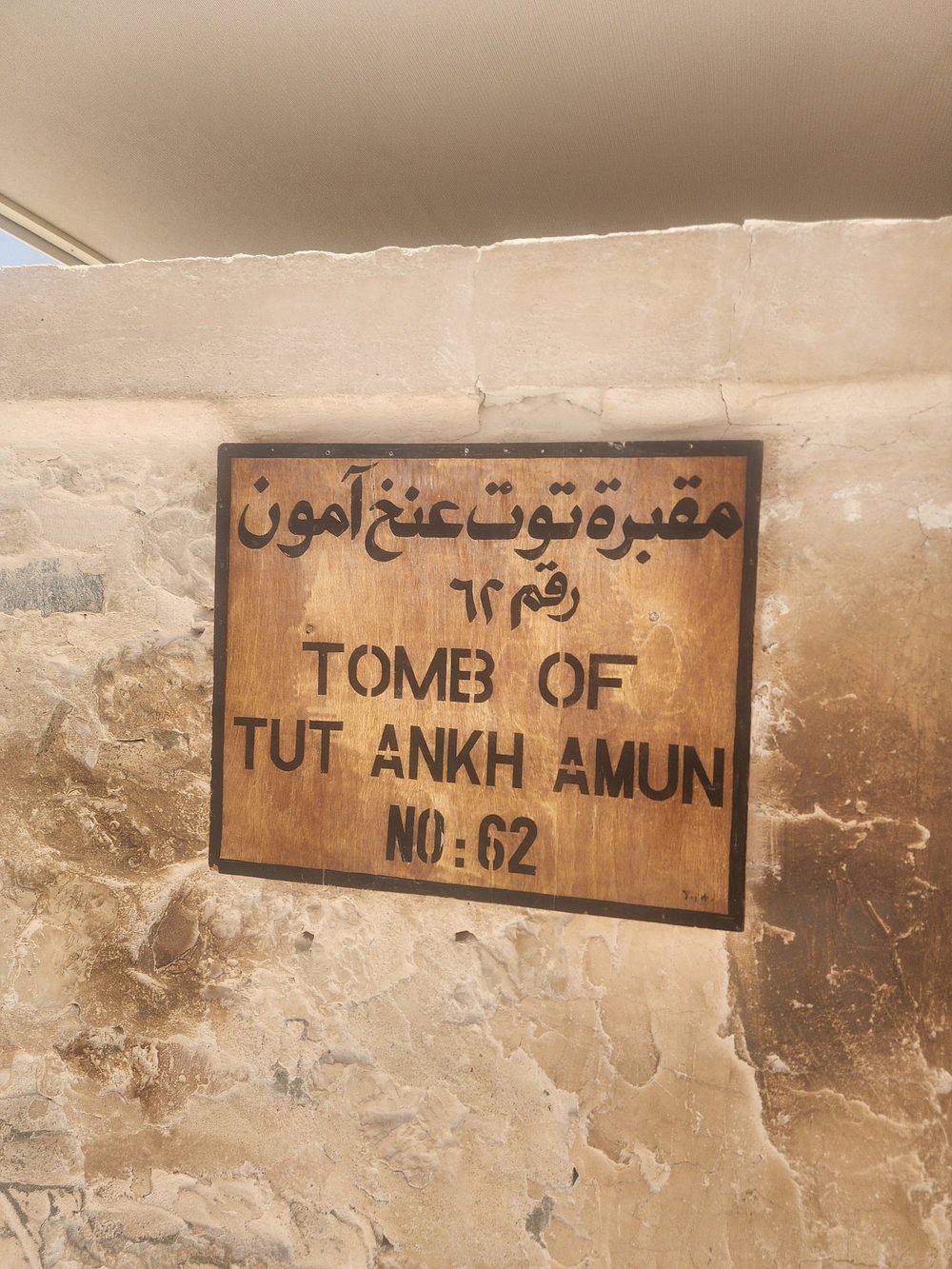
- Tomb of Tutankhamun (KV62) — Small but iconic — you stand beside the golden sarcophagus and the boy king's mummy, still resting inside.
- Tomb of Merenptah (KV8) — A cavernous, slightly cooler tomb of Ramses II's successor, with a beautifully carved granite sarcophagus.
- Tomb of Ramses III (KV11) — Wide, well-lit and packed with vivid scenes of Egyptian daily life, harpists and food offerings.
- The Valley Landscape — The silent, sun-bleached amphitheatre of cliffs — one of the most atmospheric places in Egypt at first light.
Visitor Experience
You enter through a modern visitor centre with a scale model of the valley, then take a short shuttle ('taftaf') up to the tomb area. The standard ticket includes any three tombs from the rotation currently open — usually eight to ten tombs — and a handful of star tombs require a supplementary ticket.
Inside, you descend on wooden walkways past reliefs of the Book of the Dead, the Book of Gates and the Amduat — the pharaoh's guidebook to the afterlife. The air is dry, warm and utterly silent apart from the low voices of visitors. A Remoza Egyptologist stays outside to explain each tomb before you enter, in line with the site's no-guide rule inside the burial chambers.
Best Time to Visit
October through April is by far the most comfortable window, with daytime temperatures in the mid-20s to low-30s °C. Between June and August the valley regularly climbs above 42 °C by midday — visits are still possible, but must start at sunrise.
Whatever season you choose, the first two hours after opening are magical: cool air, soft light on the cliffs and far fewer visitors inside each tomb.
Opening Hours
The Valley of the Kings is open daily from 06:00 to 17:00 in winter and 06:00 to 18:00 in summer. Ticket sales close one hour before the site closes.
Ramadan and major holidays may shorten hours by 60–90 minutes; Remoza always confirms current timings the day before your visit.
Ticket Information
The general ticket covers three tombs, chosen at the gate from those open that day. It costs 750 EGP per adult and 375 EGP per child.
Three tombs sit outside that ticket entirely and each needs its own:
Tutankhamun — 700 EGP adult, 350 EGP child. The most famous tomb in the world and the smallest one you will enter. Almost the entire contents are in the Grand Egyptian Museum now; what remains here is the mummy itself and a modest painted chamber. Whether it is worth roughly the price of a second general ticket depends on what you came for. If seeing the tomb where the treasure was found matters to you, buy it and set your expectations. If you want painted walls, spend the money on Seti I instead.
Seti I — 2,000 EGP, and children pay the adult price. This is the most expensive ticket in the valley by a wide margin, and it is also the finest tomb in it: the longest, the deepest, and with painted relief work that nothing else here matches. If you are only going to buy one extra ticket in your life, this is the one. If you are travelling as a family, note that the child discount does not apply here — for four people that is a significant sum, and it is worth deciding before you reach the window rather than at it.
Ramesses V and VI — 220 EGP adult, 110 EGP child. The best value ticket in the valley, and it is not close. A vast tomb with an astronomical ceiling that most visitors miss entirely because they spent their budget on Tutankhamun. If you buy exactly one extra ticket and cost is a factor, buy this one.
A note on the prices: these are the fees as of September 2026. Ticket prices in Egypt are revised periodically and the tombs open on any given day rotate for conservation, so treat this as a recent snapshot rather than a permanent list.
How to Get There
The valley sits on the West Bank of the Nile, about a 30–40 minute drive from most Luxor hotels and Nile cruise moorings. Remoza guests are collected directly from their hotel or ship by a private air-conditioned vehicle with a licensed Egyptologist.
If you're arriving by hot air balloon, the flight lands within sight of the valley and your driver meets you at the balloon field for onward transfer — a very popular Remoza combination.
Practical Tips
- Start early — Aim to be at the gate by 06:15 in summer, 07:00 in winter — you'll practically have the tombs to yourself.
- Wear closed shoes — The ramps are steep, dusty and sometimes slippery from centuries of foot traffic.
- Carry water — Bring at least 1.5 litres per person; there is no shade inside the valley bowl.
- Skip the crowds inside KV62 — Tutankhamun's tomb is small — visit last, when tour buses have moved on.
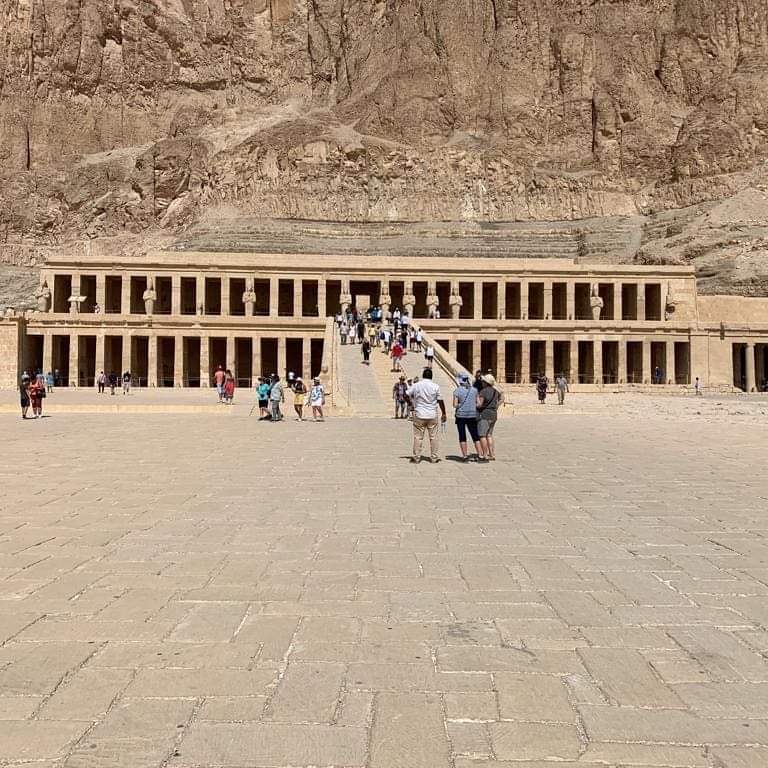
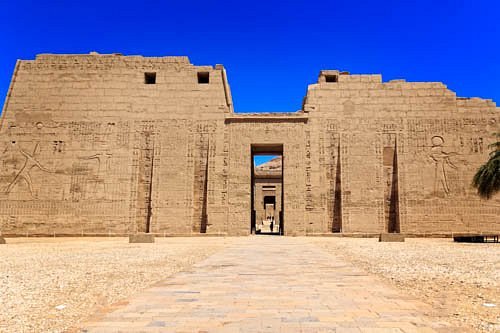
- Pair with Hatshepsut & Medinet Habu — The three sites work beautifully as one West Bank private day tour.
Frequently Asked Questions
Which tombs should I choose?
For most visitors, we recommend Ramses VI, Merenptah and Ramses III on the standard ticket, then adding Seti I as a premium tomb. Your Remoza Egyptologist tailors the pick to which tombs are open on your day.
Can I take photos inside the tombs?
Yes. Since 2020 personal photography with phones and small cameras is allowed at no extra charge inside most tombs. Tripods, flash and professional gear still require a permit.
Is the Valley of the Kings suitable for children?
Yes, and children under 6 enter free. Older children love the 'treasure hunt' feel of the tombs. Bring a hat, sunscreen and plenty of water.
How long does a visit take?
Plan on 2 to 2.5 hours inside the valley itself, plus travel time. Combined with Hatshepsut and the Colossi of Memnon it fills a comfortable half-day; add Medinet Habu and it becomes a full day.
Is it worth paying extra for the Tomb of Seti I?
For anyone with a real interest in ancient art, yes — it is unquestionably the most beautiful painted tomb ever discovered in Egypt, and one of the finest works of art on earth.
Can I visit without a guide?
You can, but you'll miss most of the story. Guides are not allowed to speak inside the tombs themselves, so Remoza briefs you fully outside each tomb, then lets you explore at your own pace.