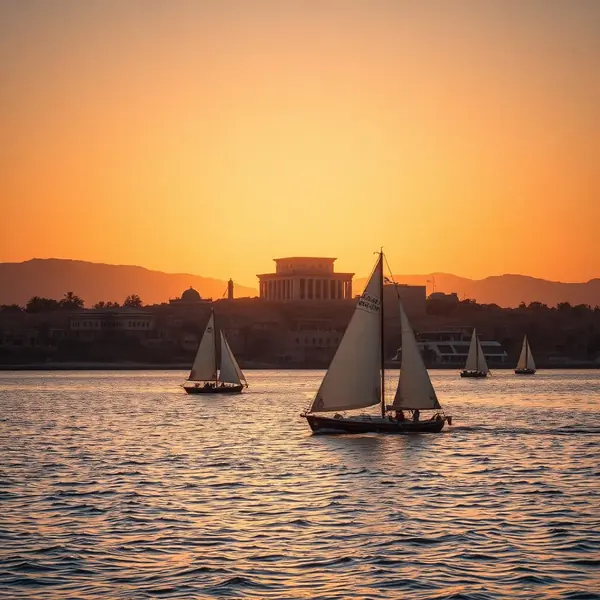
Philae, Nubian villages, Abu Simbel and the granite-strewn Nile — what is actually worth your time in Aswan.
Aswan at first sight
Most people arrive in Aswan expecting temples and find something else first: the river. The Nile is wider here than anywhere else in Egypt, broken by granite boulders and green islands, and the light on that rock at either end of the day is the thing visitors photograph most and expect least.
The monuments are here too — Philae on its island, Abu Simbel three hours south, the High Dam that reshaped the whole country. But Aswan's pace is different from Cairo or Luxor. Most travellers give it a day and wish they had given it two.
This is what is genuinely worth your time, in the order we would do it.
Philae Temple
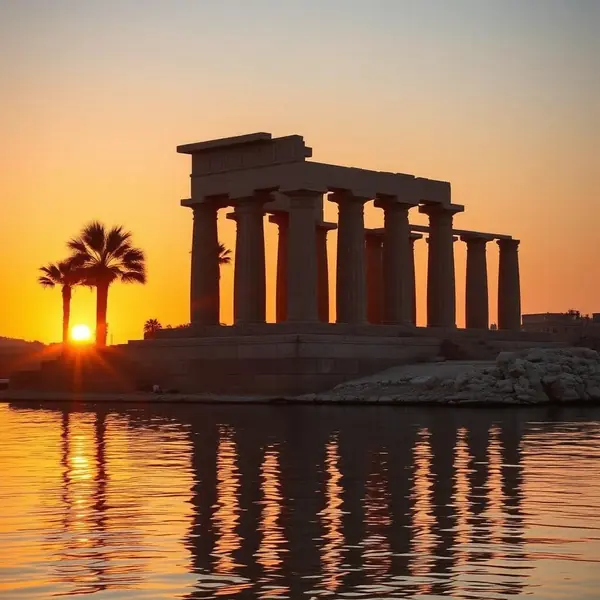
The temple of Isis stands on an island, reached only by motorboat, and it was moved there stone by stone.
When the High Dam was built, the original Philae Island disappeared under the water. Between 1972 and 1980 a UNESCO operation cut the temple into thousands of blocks and rebuilt it on higher ground at Agilkia, reshaping the new island to match the old one. What you walk through today is the same temple, in a different place.
Allow around two hours including the boat crossing in both directions. Go early if you can — the island is small and fills up when the tour groups arrive.
The boat is separate from the entrance ticket and is usually arranged on the day. Agree the price before boarding, or come with an operator who has already handled it.
A felucca at sunset
The single best hour in Aswan, and the cheapest thing on this list.
A felucca is a small lateen-rigged sailing boat with no engine. You leave from the Corniche in the late afternoon and sail between Elephantine Island and the west bank while the granite on the far shore turns from grey to gold. There is nothing to see in the sightseeing sense. That is the point.
Agree the price before you step on board, or book it through your operator. Waterfront negotiation is where most visitors overpay in Aswan.
The Nubian villages
This is where Aswan stops feeling like the rest of Egypt.
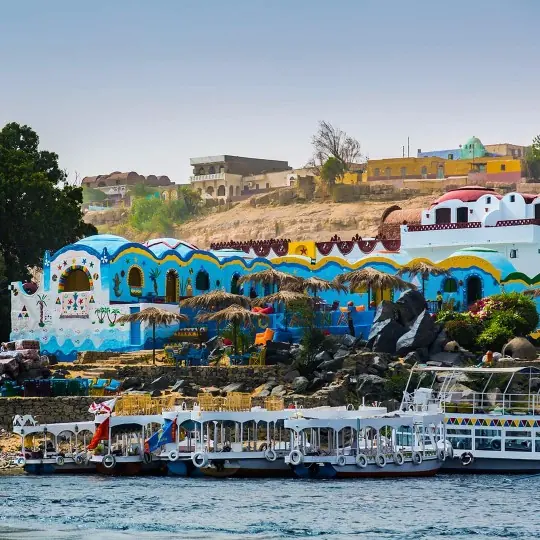
The Nubian villages on the west bank and on Elephantine Island are painted in blues, ochres and pinks, with domed roofs and hand-decorated walls. The language is different, the food is different, the music is different. Nubia has its own history stretching back thousands of years, and much of it was displaced when Lake Nasser filled.
Two things surprise visitors. The first is how much color there is — it photographs unlike anywhere else in the country. The second is how clean the villages are. Travelers arriving from Cairo notice it immediately and often mention it before anything else.
You reach the villages by boat, and visits usually include tea in a family house. Ask before photographing people. It is their home, not an exhibit.
Abu Simbel
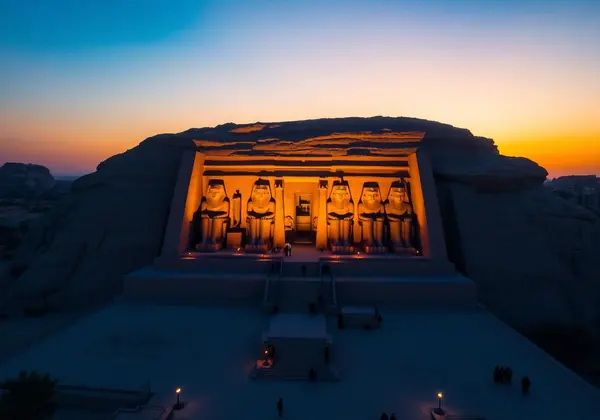
The four colossi of Ramesses II, carved into a sandstone cliff above Lake Nasser, 280 km south of Aswan and close to the Sudanese border.
Like Philae, Abu Simbel was moved — cut apart and reassembled on higher ground in the 1960s when the reservoir rose. It is the most impressive single monument in Egypt after the Pyramids, and for many people it is the reason they come this far south at all.
You can go by road, roughly three and a half hours each way with a very early start, or by air in about 45 minutes. Both are day trips returning to Aswan the same evening.
The High Dam
Not beautiful, but it explains everything else on this list.
Completed in 1970, the dam created Lake Nasser and ended the annual Nile flood that had shaped Egyptian agriculture for millennia. It also drowned Nubian villages, and would have drowned Philae and Abu Simbel had they not been moved. Standing on it, the scale of what was gained and what was lost is easier to understand than in any museum.
Thirty to forty minutes is enough. It pairs naturally with Philae and the Unfinished Obelisk in one half-day.
The Unfinished Obelisk
A single obelisk, still lying in the granite quarry where it was being cut, with a crack running through it.
Had it been completed it would have been the largest obelisk ever raised in Egypt. The crack appeared during cutting and the work was abandoned — which is exactly why it is interesting. You can see the tool marks, the trenches cut around the shaft, and how the ancient quarrymen worked.
Twenty to thirty minutes. Shade is limited, so avoid the middle of the day.
Kitchener's Island
A whole island planted as a garden, given to Lord Kitchener in the 1890s and now filled with trees and plants brought from across Africa and Asia.
Reached by boat, walkable end to end in under an hour, and one of the few shaded places in Aswan. Good in the late afternoon, and it combines well with a felucca sail on the way back.
The Nubian Museum
The best-organized museum in Upper Egypt, and the one most visitors skip.
It tells the story of Nubia from prehistory through to the salvage campaigns of the 1960s, and it is the right place to go either before or after visiting the villages — it gives context that a village visit alone does not.
The souk
Aswan's market runs parallel to the Corniche, and it is a completely different experience from Khan El Khalili in Cairo — smaller, calmer, and far less insistent. It is known for spices, hibiscus and Nubian textiles.
Late afternoon into the evening is the best time, when it cools and fills with locals rather than only visitors.
Kom Ombo and Edfu heading north
Not in Aswan, but directly on the road to Luxor.
Kom Ombo sits right on the Nile and is unusual — a double temple, dedicated to two gods and mirrored down its central axis. Edfu, further north, is the most completely preserved temple in Egypt.
If you are travelling from Aswan to Luxor by road, adding both turns a transfer into a sightseeing day. If you are on a Nile cruise, you will see them anyway.
How many days do you need
| Length | What it covers |
|---|---|
| One day | Philae, the High Dam and the Unfinished Obelisk in the morning, a felucca at sunset. Enough to have seen Aswan. |
| Two days | The above plus a full day for Abu Simbel. What we recommend for most travellers. |
| Three days | Adds the Nubian villages, Kitchener's Island and the museum without rushing, and leaves a spare morning if an Abu Simbel flight is cancelled. |
When to go
October to April. Aswan runs a few degrees warmer than Luxor, which makes December and January especially good here — dry, clear and around 25°C in the daytime. Summer is severe, above 45°C, and even early starts are demanding.
Twice a year, on 22 February and 22 October, sunlight reaches the inner sanctuary at Abu Simbel. Those are the busiest days of the year and accommodation books out months ahead.
Getting to Aswan
- flight to Aswan — By air from Cairo — just over an hour, landing about 25 minutes from the city
- overnight sleeper train — around 13 hours, private cabin with dinner and breakfast, departing from Bashteel Station in Giza
- road from Luxor — three and a half to four hours along the Nile valley, with Edfu and Kom Ombo directly on the route
Frequently Asked Questions
Is Aswan worth visiting?
Yes, and for a different reason from Luxor. Luxor is dense with monuments; Aswan is about the river, the granite landscape and Nubian culture, with Abu Simbel as its major excursion. Travelers who enjoy slowing down usually rate it their favorites stop in Egypt.
How many days should I spend in Aswan?
Two is right for most people — one for Philae and the classic sites, one for Abu Simbel. Three if you also want the Nubian villages and the museum unhurried.
What is the best thing to do in Aswan?
A felucca between the islands at sunset. It costs the least and is what visitors remember longest.
Is Aswan better than Luxor?
They are not alternatives. If you have never been to Egypt and can only choose one, choose Luxor for the monuments. If you have already seen the Valley of the Kings, or you are travelling to slow down, choose Aswan.
How far is Abu Simbel from Aswan?
280 km south — about three and a half hours each way by road, or roughly 45 minutes by air. Both are day trips returning to Aswan the same day.
Can I visit the Nubian villages respectfully?
Yes. Go with a guide who has a relationship with the family you visit, ask before photographing people, and accept the tea. It is someone's home, not an attraction.
Do I need a guide in Aswan?
For Philae, Abu Simbel and the Nubian Museum a licensed Egyptologist changes the visit substantially — the story of the relocations in particular is hard to follow without one. For the souk and a felucca, no.