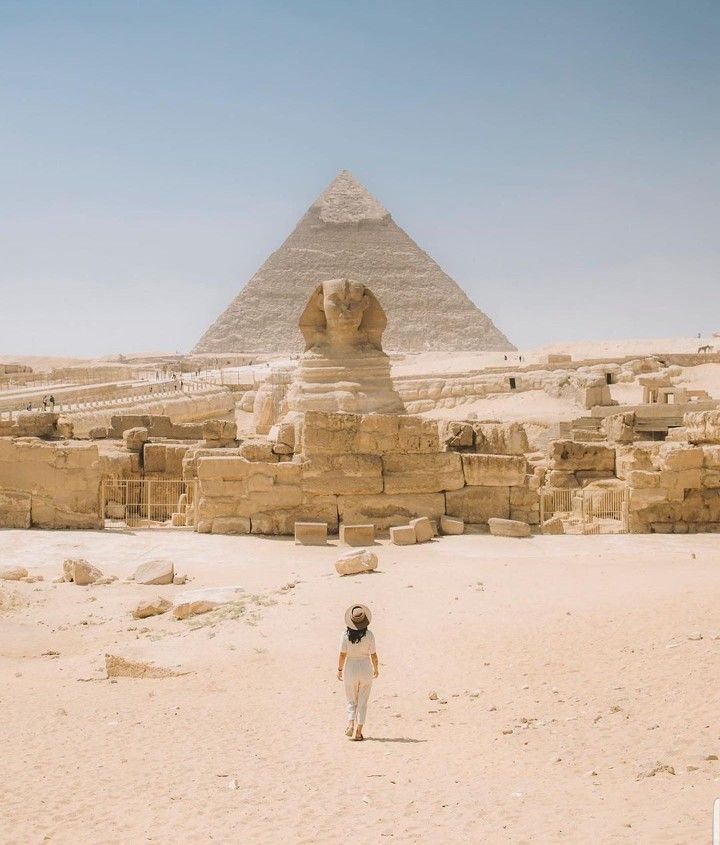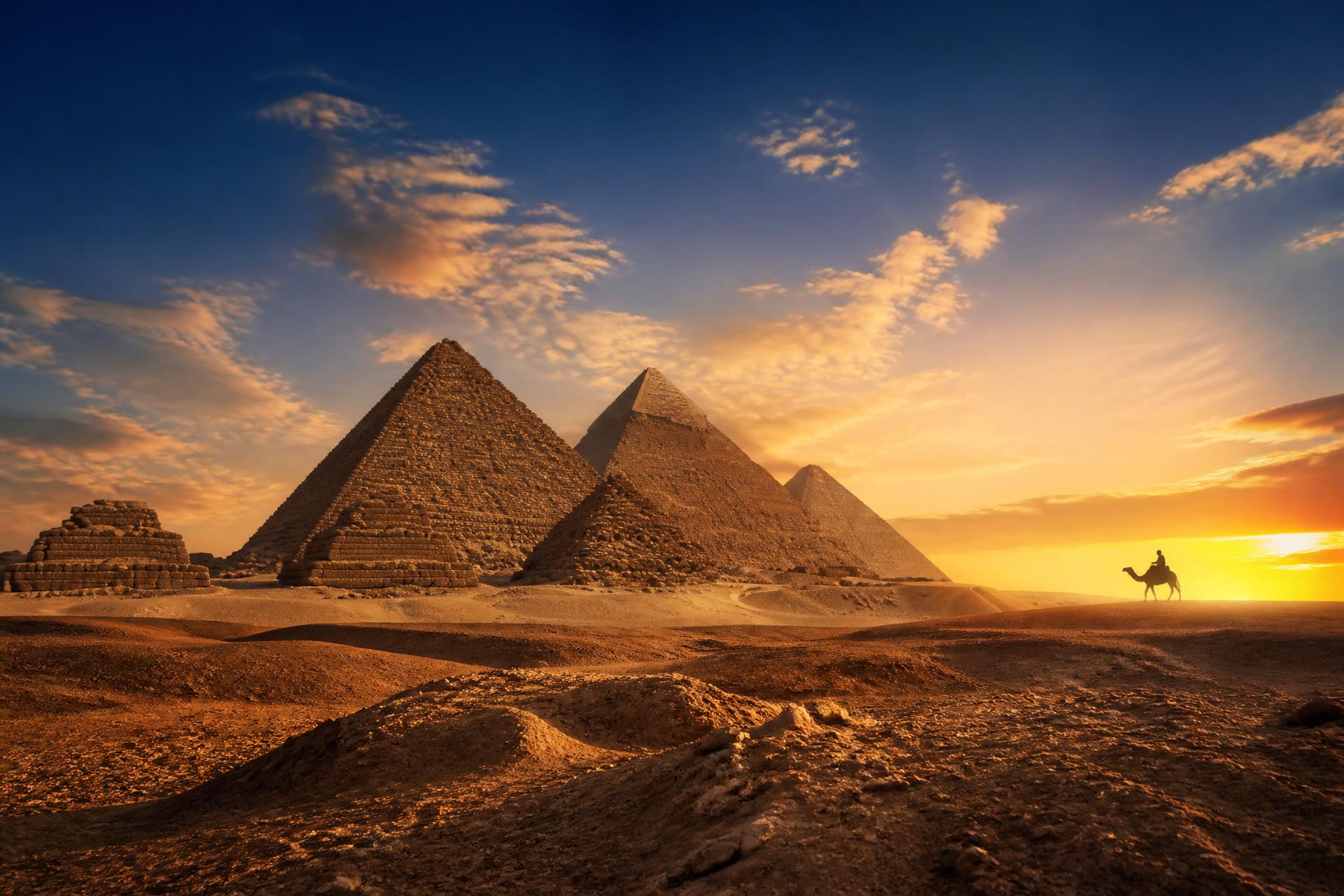
Egypt's first capital and its 3,000-year-old necropolis — the Step Pyramid of Djoser, the colossus of Ramses II and the origin of the pyramid age.
Overview
Saqqara and Memphis together tell the origin story of ancient Egypt. Memphis was the first capital of a unified Egypt, founded around 3100 BC; Saqqara was its vast necropolis, in continuous use for more than 3,000 years — longer than any other burial ground on earth.
At Saqqara you stand in front of the Step Pyramid of Djoser, the world's oldest stone monument. In Memphis, you meet a 10-metre alabaster colossus of Ramses II lying in a purpose-built museum. Together, they make the perfect complement to the Giza plateau.
History
Memphis — 'Men-nefer', the White Walls — was founded by King Narmer as the capital of the newly united Upper and Lower Egypt. For most of the Old Kingdom, it was the largest city in the world. Its temple of Ptah, god of craftsmen, gave rise to the word 'Egypt' itself (from the Greek 'Aegyptos', derived from a name for that temple).
Saqqara served as its necropolis. Around 2650 BC, the vizier Imhotep designed the Step Pyramid of Djoser — the world's first monumental stone building and the direct ancestor of every pyramid that followed. Successive dynasties added their own pyramids, mastabas, tombs and animal necropolises across the plateau.
Excavation continues at a remarkable pace. Since 2018, missions have uncovered thousands of intact coffins, painted burial chambers and animal cemeteries — some of the most exciting discoveries in modern Egyptology.
Highlights
- Step Pyramid of Djoser — The world's oldest stone monument, six stepped tiers rising 62 metres above the desert.
- Pyramid Complex of Djoser — The restored South Court, colonnaded entrance and Heb-Sed pavilions — architecture 4,700 years ahead of its time.
- Tomb of Ti — One of the finest painted Old Kingdom mastabas, with vivid scenes of farming, fishing and daily life.
- Serapeum — The vast underground galleries where the Apis bulls were buried in monumental granite sarcophagi.
- Memphis Museum — The colossal reclining statue of Ramses II and the alabaster sphinx, displayed in an open-air museum.
- Dahshur Pyramids — The Bent and Red pyramids of Sneferu — often added by Remoza as a natural third stop.
Visitor Information
Saqqara is open daily from 08:00 to 17:00 (18:00 in summer). Current official entrance fees are set by the Egyptian Ministry of Tourism and Antiquities and are subject to change without prior notice; contact Remoza Tours for the latest ticket prices. Interior visits to specific tombs and the Serapeum may carry supplementary tickets. The Memphis Museum is open daily 09:00 to 16:30 with separate admission.
The two sites sit roughly 30 minutes apart, both within an hour of central Cairo or Giza hotels. Remoza's Saqqara, Memphis & Dahshur day tour includes a private guide, air-conditioned vehicle, all entrance tickets and a Nile-view lunch stop.
Best Time to Visit
October to April is the ideal season, with clear skies and comfortable temperatures. Early morning starts are best year-round — Saqqara is exposed desert with little shade.
Compared to Giza, Saqqara and Memphis are far quieter. Even in high season, you can often stand alone at the base of the Step Pyramid — one of the great privileges of an Egyptian trip.
Practical Tips
- Combine the three sites — Saqqara + Memphis + Dahshur is the perfect full-day tour; ask Remoza to add all three.
- Bring cash for interior tickets — The best painted mastabas require small extra tickets bought on site — Remoza handles this for you.
- Wear real shoes — The Serapeum tunnels are cool and dark; sandy paths lead between the pyramids.
- Look for the newest discoveries — New tombs open to visitors regularly; your Remoza guide will know which are currently accessible.
- Pair with the Grand Egyptian Museum — Many artefacts from Saqqara are now on view at the GEM — visiting both builds a complete picture.
Frequently Asked Questions
Is Saqqara worth visiting if I've already seen Giza?
Very much so. Saqqara is older than Giza and quieter — the Step Pyramid is the direct ancestor of every pyramid that followed, and the painted mastabas are some of the finest art of the ancient world.
How long does the visit take?
A comprehensive Saqqara + Memphis day tour takes about 6 to 7 hours door to door from a Cairo or Giza hotel. Adding Dahshur pushes it to 8 hours.
Can I go inside the Step Pyramid?
Yes — the interior corridors of Djoser's Step Pyramid have been open to visitors since 2020 (subject to occasional closures for restoration).
Is Memphis a real archaeological site or just a museum?
Both. The main visit today is the open-air Memphis Museum around the Ramses II colossus, but the surrounding village sits directly on top of the ancient city — active excavation continues nearby.
Is Saqqara suitable for families?
Yes. The open desert setting, colourful tomb paintings and Serapeum tunnels are hugely evocative for children. Remoza tailors the walking distance to your group.
How does Saqqara compare to Dahshur?
Saqqara is the classic first stop — the Step Pyramid and painted tombs. Dahshur is quieter and geologically fascinating, with Sneferu's Bent and Red pyramids. Both together make a superb full day.