The only surviving Wonder of the Ancient World — history, what to see, best time to visit and how to plan a private Giza tour.
Overview
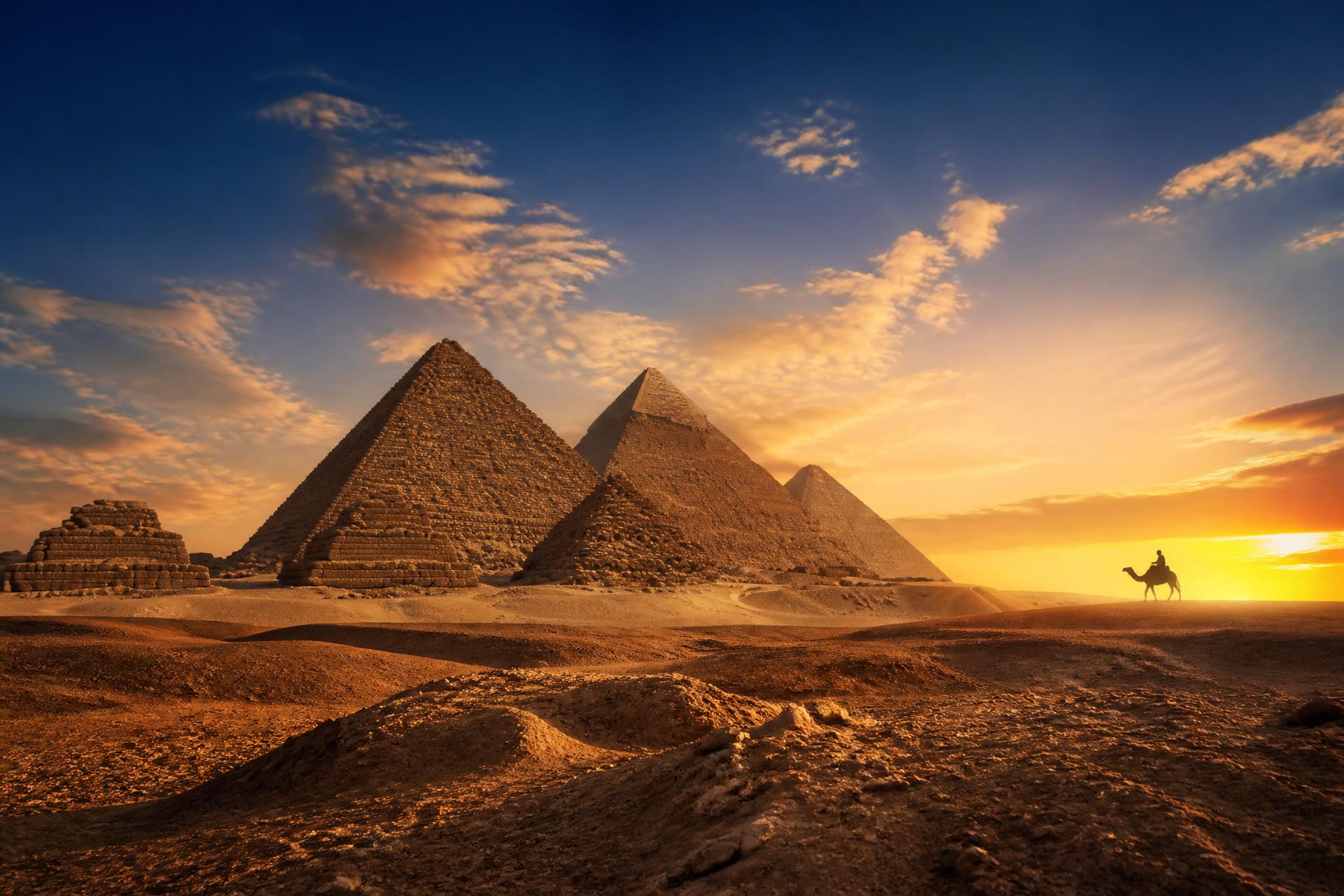
The Pyramids of Giza are the only surviving Wonder of the Ancient World and, for most travelers, the single most anticipated moment of a trip to Egypt. Three great pyramids, six smaller queens' pyramids, the enigmatic Sphinx and a landscape of mastaba tombs sit together on a limestone plateau at the very edge of Cairo, where the city ends and the Sahara begins.
For all their fame, the pyramids in person still surprise. They are far larger than photographs suggest, their alignment is uncannily precise, and the silence of the desert around them makes their scale feel almost impossible.
History
The Giza pyramids were built during Egypt's 4th Dynasty, around 2600–2500 BC, at the height of the Old Kingdom. Pharaoh Khufu built the Great Pyramid, originally 146.6 metres tall — the tallest man-made structure on earth for nearly 3,800 years. His son Khafre added the second pyramid and the Great Sphinx, while his grandson Menkaure completed the smallest of the trio.
The complex is far more than three tombs. Each pyramid once stood at the centre of a walled precinct with a mortuary temple, causeway and valley temple by the Nile. Boat pits held wooden funerary barques — one of Khufu's, 44 metres long, is now displayed in a dedicated museum beside the plateau.
The pyramids were plundered in antiquity and studied continuously since Napoleon's savants arrived in 1798. Excavation continues today, with new tombs and workers' cemeteries still being discovered along the plateau's edges.
Highlights
- Great Pyramid of Khufu — The largest pyramid ever built — you can climb into the interior to reach the Grand Gallery and King's Chamber.
- Pyramid of Khafre — Slightly smaller but appears taller from a distance; still capped with its original polished limestone at the summit.
- Pyramid of Menkaure — The smallest of the three, with elegant proportions and a granite-cased base.
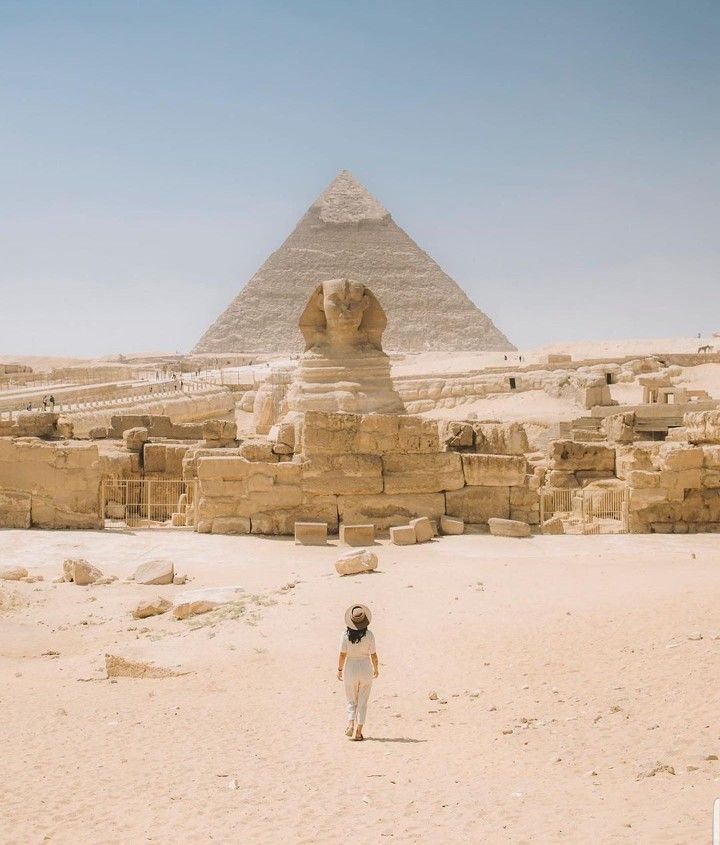
- The Great Sphinx — The 20-metre-tall guardian carved from a single limestone outcrop, still watching the eastern horizon.
- Panorama Viewpoint — The classic desert vantage point where all three pyramids and the Sphinx align in a single frame.
- Solar Boat Museum — Khufu's reassembled 4,500-year-old cedar boat — one of the oldest surviving large wooden objects on earth.
Visitor Information
The Giza plateau is open daily from 07:00 to 17:00 in winter and 07:00 to 19:00 in summer. Current official entrance fees are set by the Egyptian Ministry of Tourism and Antiquities and are subject to change without prior notice; contact Remoza Tours for the latest ticket prices.
The nightly Sound & Light Show runs in a rotation of languages including English, French, Spanish, Italian, German and Arabic. Photography is included in the general ticket. Remoza guests are collected in a private air-conditioned vehicle with a licensed Egyptologist and full skip-the-line access.
Best Time to Visit
October to April offers the most comfortable weather, with daytime temperatures in the low-to-mid 20s °C. Between June and August the plateau can climb above 40 °C — visits should start at opening.
The best light of the day is between 07:00 and 09:30, when the sun is low and photography is at its most flattering. Late afternoon is also beautiful, with a golden desert glow across the western faces.
Practical Tips
- Arrive at opening — The plateau is quietest and coolest between 07:00 and 09:00 — the difference in experience is dramatic.
- Enter one pyramid, not three — The interior chambers are similar; one inside visit is enough for most travelers.
- Say no politely, then walk on — Camel and horse touts are persistent — Remoza arranges any camel photo stop in advance at a fixed rate.
- Save time for the Sphinx — The Valley Temple beside the Sphinx is often skipped but is one of the plateau's most beautiful buildings.
- Combine with the GEM — Half a day at the pyramids pairs perfectly with an afternoon at the Grand Egyptian Museum next door.
Frequently Asked Questions
How long do I need at the Pyramids of Giza?
Around 3 to 4 hours on the plateau, including the panorama viewpoint, one pyramid interior and the Sphinx. Remoza usually pairs it with the Grand Egyptian Museum as a full day.
Is it worth going inside a pyramid?
Yes, at least once — the climb through the Grand Gallery of Khufu is unforgettable. It is warm, narrow and steep, so travelers with claustrophobia may prefer the shorter Khafre or Menkaure interior.
Can I ride a camel or horse at the pyramids?
Yes, and it can be beautiful at sunset. Book through Remoza rather than on the plateau — you get a fixed rate, insured animals and a proper photographer.
Is the Sound & Light Show worth it?
For a first-time visit, yes. It's a theatrical way to see the pyramids at night, especially in the cooler months.
Are the Pyramids of Giza safe to visit?
Very. The site is heavily protected and one of the most-visited monuments in the world. Remoza also provides a private guide and driver throughout.
Can I visit the Pyramids independently or do I need a tour?
You can, but a private Egyptologist makes an enormous difference — the plateau is huge, the story is layered, and touts are much easier to sidestep with a local expert alongside you.